

Reiki Healing:
What It Is, How It Works & Its Benefits
The Art of Vital Flow
Reiki is a gentle, non-invasive energy healing practice that originated in Japan in the early 20th century where it was founded by Mikao Usui. The term is derived from "Rei" (Universal) and "Ki" (Life Energy)—referring to the subtle vibration that flows through all living things.
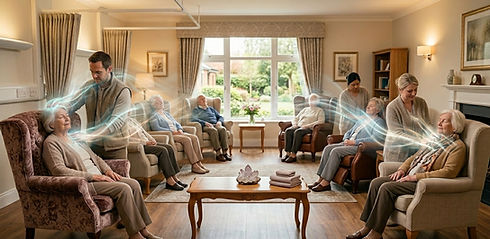
As a Reiki master and practitioner, I act as a conduit for this energy, helping to clear blockages and encourage the body’s natural ability to rebalance itself. Whether through light touch or "distance healing". Reiki works to harmonize and encourage a smoother flow of energy, through mind, body and spirit, during which time, many people experience a deep sense of calm and relaxation.
Understanding the Chakras: Your Wheels of Light
In Reiki, we work with seven main energy centers known as Chakras (Sanskrit for "wheels"). These centers run along the spine and are the intersections where our physical, emotional, and energetic selves meet.
Each chakra is connected to specific endocrine glands and organs, meaning that an energetic shift in a chakra can have a direct, calming effect on your physical biology.

The Benefits of a Reiki Session
While Reiki is a complementary practice rather than a medical treatment, its ability to shift the body into a restorative state offers profound benefits:
-
Stress Dissolution: Rapidly reducing the "mental noise" of everyday life.
-
Emotional Lightness: Releasing "stuck" emotions and feelings of overwhelm.
-
Enhanced Sleep: Calming the nervous system to allow for deeper Delta-state recovery.
-
Vitality: Increasing your sense of overall energy and mental clarity.
Lineages of Practice: I am trained in multiple branches of Reiki, including the original Usui System and the refined, high-frequency Holy Fire® III Reiki.

Crown Chakra (Sahasrara)
The Crown Chakra is located at the top of the head and is associated with spiritual connection, higher consciousness, and expanded awareness. When balanced, it is linked to clarity, inner peace, and a deep sense of unity. When unbalanced, it may be associated with difficulty letting go of fear, anxiety, or mental tension.
This chakra is connected to the brain, as well as the hypothalamus and pituitary gland, which play key roles in regulating the body and mind.
Associated foods are typically light or white in colour, such as parsnip, coconut, white onion, garlic, and potato. Supporting herbs and spices include lavender, valerian root, chamomile, and allspice.
The element associated with the Crown Chakra is thought, and its seed mantra is Aum.

The Third Eye Chakra is located between the eyebrows and is associated with intuition, insight, imagination, and inner wisdom. When balanced, it supports clarity of perception, self-awareness, and strong intuitive understanding. When unbalanced, there may be difficulty trusting intuition or seeing beyond surface appearances.
This chakra is connected to the brain, as well as the hypothalamus and pituitary gland, which influence neurological and hormonal regulation.
Associated foods are often deep purple or dark in colour, such as beetroot, purple grapes, red onion, and aubergine. Supporting herbs and spices include rosemary, mint, hawthorn, and dandelion root.
The element associated with the Third Eye Chakra is light, and its seed mantra is Om.
Third Eye Chakra (Ajna)

Throat Chakra (Vishuddha)
The Throat Chakra is located at the base of the throat and is associated with communication, self-expression, truth, and authenticity. When balanced, it supports clear communication, confident expression, and the ability to listen with awareness. When unbalanced, there may be difficulty expressing thoughts or a fear of judgement.
This chakra is connected to the thyroid gland, which plays a role in metabolism and hormonal balance.
Associated foods are typically blue or brown in colour, such as blueberries, bilberries, dark chocolate, and almonds. Supporting herbs and spices include peppermint, sage, lemongrass, and coltsfoot.
The element associated with the Throat Chakra is ether, and its seed mantra is Ham.

Heart Chakra (Anahata)
The Heart Chakra is located in the centre of the chest and is associated with love, compassion, trust, and emotional balance. When balanced, it supports empathy, emotional openness, and healthy relationships. When unbalanced, there may be difficulty giving or receiving love freely.
This chakra is connected to the heart, lungs, and thymus gland, which support circulation, breathing, and immune function.
Associated foods are typically green in colour, such as kale, spinach, celery, courgette, and green peppers. Supporting herbs and spices include basil, thyme, parsley, and cayenne pepper.
The element associated with the Heart Chakra is air, and its seed mantra is Yam.

The Solar Plexus Chakra is located in the upper abdomen and is associated with personal power, confidence, willpower, and self-esteem. When balanced, it supports inner strength, emotional stability, and a sense of purpose. When unbalanced, there may be low confidence, control issues, or difficulty with self-discipline.
This chakra is connected to the pancreas, liver, and stomach, which are essential for digestion and energy processing.
Associated foods are typically yellow in colour, such as banana, sweetcorn, pineapple, yellow peppers, and lemon. Supporting herbs and spices include ginger, turmeric, cinnamon, spearmint, and anise.
The element associated with the Solar Plexus Chakra is fire, and its seed mantra is Ram.
Solar Plexus Chakra (Manipura)

Sacral Chakra (Svadhisthana)
The Sacral Chakra is located just below the navel and is associated with creativity, emotions, relationships, pleasure, and vitality. When balanced, it supports emotional flow, creative expression, and healthy connection with others. When unbalanced, there may be emotional instability or difficulty expressing feelings.
This chakra is connected to the reproductive organs, kidneys, bladder, and large intestine, which play a role in elimination and reproductive health.
Associated foods are typically orange in colour, such as carrots, oranges, papaya, melon, and sweet potato. Supporting herbs and spices include fennel, coriander, caraway seed, liquorice, and paprika.
The element associated with the Sacral Chakra is water, and its seed mantra is Vam.

The Root Chakra is located at the base of the spine and is associated with grounding, stability, survival, and security. When balanced, it supports feelings of safety, strength, and connection to the physical world. When unbalanced, there may be fear, instability, or difficulty feeling grounded.
This chakra is connected to the adrenal glands, large intestine and rectum, involved in survival responses and elimination.
Associated foods are typically red in colour, such as tomatoes, strawberries, red peppers, and pomegranate. Supporting herbs and spices include ginger, rosemary, burdock root, cayenne pepper, and ashwagandha.
The element associated with the Root Chakra is earth, and its seed mantra is Lam.